
Gold Price Prediction: Long Term Outlook for the Next 5-10 Years
Gold price prediction is one of the most important topics for investors, wealth planners, and long term buyers. For centuries, gold has been considered a reliable store of value, a hedge against inflation, and a safe haven asset during economic uncertainty.
While short term gold price fluctuations often make headlines, understanding the long term gold price outlook requires analyzing deeper economic factors such as global inflation, central bank policies, mining supply, and investor demand.
In this article, we explore the gold price prediction for the next 5-10 years, examining the key drivers that could shape the future of the gold market and what it means for investors and gold buyers in Sri Lanka and around the world.
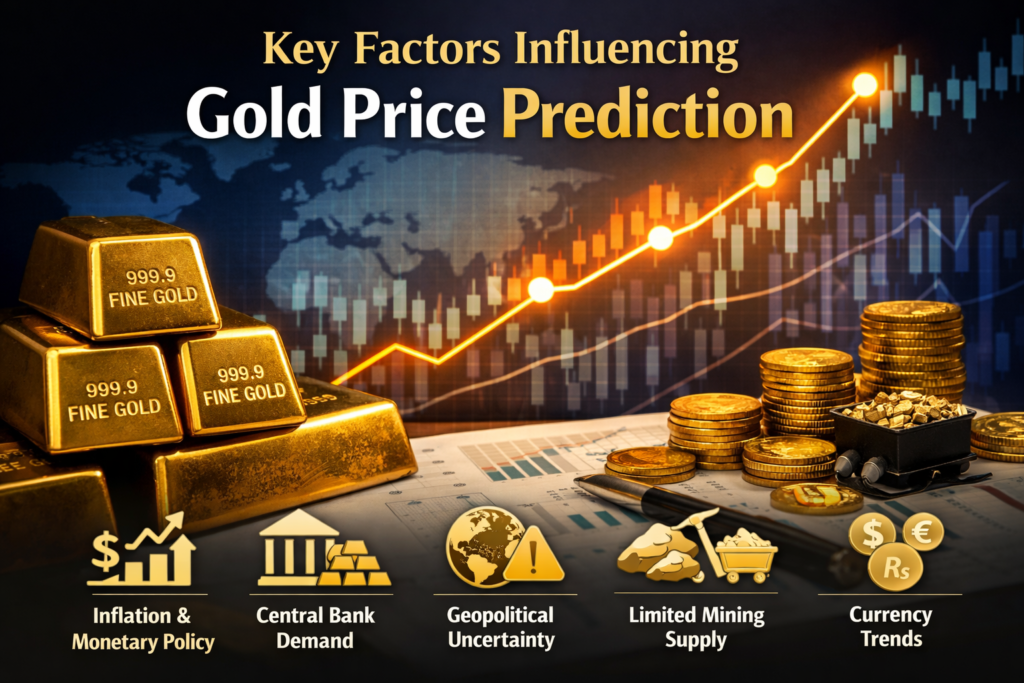
Key Factors Influencing Gold Price Prediction
Gold price prediction is influenced by several important economic and market factors. Inflation and global monetary policies play a major role because investors often turn to gold as a hedge against rising prices and currency depreciation. Central bank demand and institutional investments also support long term gold prices as many countries increase their gold reserves to strengthen financial stability. In addition, geopolitical tensions, economic uncertainty, and global trade conflicts tend to increase demand for gold as a safe haven asset. Limited gold mining supply and production challenges can also push prices upward over time. Furthermore, currency trends, especially fluctuations in the U.S. dollar and local currencies such as the Sri Lankan rupee, significantly impact gold prices in global and local markets. Together, these factors shape long term gold price predictions and influence investor confidence in gold as a reliable store of value.
Gold Price Prediction for the Next 5–10 Years
Gold price prediction for the next 5-10 years suggests a generally positive long-term outlook driven by several global economic factors. Rising inflation, increasing government debt, and ongoing economic uncertainty are expected to maintain strong demand for gold as a safe haven asset. Central banks around the world continue to increase their gold reserves, while investors use gold to protect their wealth and diversify their portfolios. At the same time, limited mining supply and higher production costs may restrict new gold output, which can support higher prices over time. Although short term fluctuations may occur due to geopolitical events, currency movements, and changes in monetary policy, many analysts believe gold will continue to appreciate gradually in the long run. For countries like Sri Lanka, changes in the exchange rate between the Sri Lankan rupee and the U.S. dollar may further influence local gold prices, sometimes causing sharper increases compared to global market trends.
Currency Trends and the U.S. Dollar
Currency trends, particularly movements in the U.S. dollar, play a significant role in influencing global gold prices. Since gold is internationally priced in U.S. dollars, changes in the dollar’s strength directly affect gold’s value in global markets. When the U.S. dollar weakens, gold typically becomes more attractive to investors because it becomes cheaper for buyers using other currencies, which increases demand and pushes prices upward. Conversely, a stronger dollar can temporarily limit gold price growth. In countries like Sri Lanka, fluctuations in the Sri Lankan rupee against the U.S. dollar can further impact local gold prices. A weaker rupee often results in higher domestic gold prices, even if international gold prices remain stable. Therefore, monitoring currency movements and U.S. dollar trends is essential for understanding long term gold price predictions.
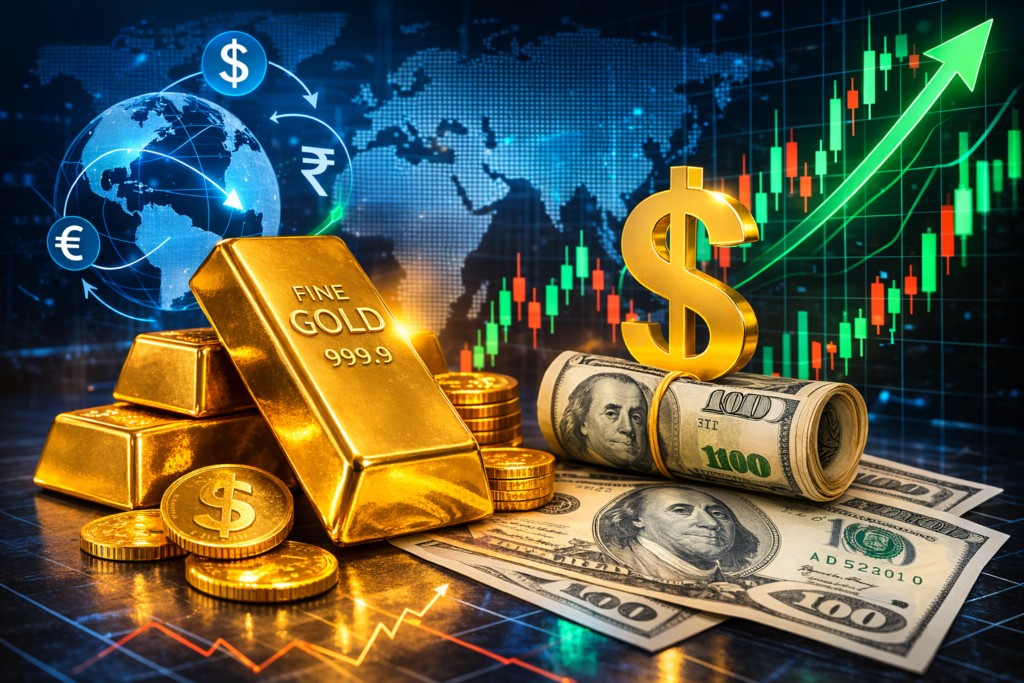
What This Means for Gold Investors and Buyers
For gold investors and long term buyers, these market trends highlight the importance of gold as a reliable asset for protecting wealth and maintaining financial stability. Gold continues to serve as a hedge against inflation, currency fluctuations, and economic uncertainty, making it an attractive option for individuals looking to preserve their purchasing power over time. Investors often include gold in their portfolios to diversify risk and balance exposure to other assets such as stocks and bonds. For buyers, adopting a long term strategy such as purchasing gold gradually rather than attempting to time short term price movements can help reduce the impact of market volatility. By staying informed about global economic conditions, central bank policies, and currency trends, investors and buyers can make more confident decisions when planning their long-term gold investments.

Limited Gold Supply and Mining Challenges
Limited gold supply and increasing mining challenges are important factors influencing long-term gold price predictions. Gold mining has become more difficult in recent years due to declining ore grades, rising production costs, environmental regulations, and fewer major gold discoveries worldwide. Many existing gold mines are producing less gold than before, while developing new mining projects requires significant investment, advanced technology, and long approval processes. As global demand for gold continues to grow from investors, central banks, and jewelry markets, the limited expansion of gold supply can create upward pressure on prices over time. These supply constraints play a significant role in supporting long-term gold price growth and strengthening gold’s position as a valuable and scarce asset.